The following is the personal account of a single, long-winded individual’s experiences living and working in Antarctica. No part of it has been reviewed or in any way endorsed by the United States Antarctic Program or the National Science Foundation, or any other public or private organization, institution, contractor, or company associated therewith. The views expressed herein are the author’s alone, for good or for ill.
Day 30: 12 February, 62 miles today, 971 miles remaining to McMurdo, elevation 9,450 feet, ambient temperature -32°C, the Swamp (aka the Marsh)
My knees were killing me. I had come out of the SPOT 1 fuel offload unscathed, but something in the combination of the cold and the backbreaking pace of the SPOT 3 turnaround left me hobbling around camp much the wizened old man I was starting to fear I had already become. Squeegeeing fuel from 3,000 gallon bladders by hand is, it turns out, a kid’s game, one that left me wondering how much longer I’d be able to keep doing this kind of work. I’d seen men younger than me broken and worn into premature senescence by years of hard manual labor, no longer able to run a shovel, pickaxe, hammer, or even a broom and thus confined to a bitter lifetime at some cluttered desk in some harshly-lit office—and I had never been one to take it easy on a job just because a few of my joints had become tender and frail with misuse. But then again, our crew’s resident grandpa was elbow-deep in the diesel-spattered snow with the rest of us, telling stories of all the industrial accidents he and his nine remaining fingers had survived. So there was, I supposed, still hope.
For the return trip to McMurdo, SPOT 3 was rigged for speed. The cluttered anchor we called a tool shed was broken off of the camp train and hitched by itself behind a single tractor. A tandem team was assigned to the now lighter series of camp modules, and another single would be pulling the machine left behind by the NPQ’d mechanic we had seen off the night before. One tractor would haul all of the fuel we would to carry us to our cache down on the Ross Ice Shelf, while three others had pairs of empty fuel loads married together by a long, thin towing rope. One of the blade CATs was left untethered, free to jump in as a tow truck if needed, but otherwise tasked with smoothing out lumpy bits of trail and replacing missing flags in preparation for next year’s traverse. That left 308 to pull the three remaining empty fuel loads, a thruple of CRREL tools that extended some 250’ from the vehicle’s ass end. Each of the two dozen bladders had been drained of fuel and pumped comically full of air, which made sheet of plastic light enough to skate across the snow in pretty much any random direction they chose. The dyneema rope tying the three loads together was kept taught by weight of each, but each CRREL tool moved however it pleased, giving my tractor a long, slowing wagging tail that I learned early on to keep well away from the flag line—or anything else I’d prefer didn’t get mowed down by a swinging sheet of HMW.
The weather was fine the day we left the South Pole for the second, and last, time. It was cold, but the wind had finally taken a day off, letting a blanket of low clouds settle in over the plateau and erase everything more than a mile away. Every tractor sputtered and choked, struggling to find an even rhythm in the morning’s chill, and it was a long while before all the machines were warm and ready to roll. We swept around camp, shoveling up the odd drips of engine oil, hydraulic fluid, and glycol, and replacing the straps and shackles that had been borrowed for the offload. The station we were leaving was all but shuttered for winter, the official close scheduled just a few days later. With much of the summer staff already gone, the place was already a sort of ghost town, the hallways empty and the galley never quite reaching the lunchtime roar it had once easily sustained. Pole was going into hibernation. We would leave it to the quiet isolation of its long and haunted winter, ten tractors slowly filing into formation and drifting quietly into the fog, at last disappearing into the great white wilderness that surrounded the lonely outpost for a thousand miles.

Day 31: 13 February, 67 miles today, 904 miles remaining to McMurdo, elevation 9,585 feet, ambient temperature -30°C, Sastrugi National Park
Life on the trail to the South Pole—life on any trail, really—is exceptionally repetitive. Your mornings are miles, your afternoons are miles, your nights are spend resting in preparation for more miles while you dream, also, of miles. Even with variety built conscientiously into the food order a sort of bland routine emerges. Breakfast, same. Lunch, same. Dinner, one of five rotating options. Diversification requires the sort of energy nobody has to spare when all their attention is poured into moving farther along the trail. This isn’t necessarily a bad thing. The drive to keep making forward progress gives your life the sort of pinpoint focus that is largely missing from everyday life: all you have to do is be on trail. But it does, after a while, give every moment a sort of wearied Groundhog Day deja-vuishness.
This has been true on every thru-hike of every long-distance trail I’ve been on, and it was true for SPOT 1, as well—but SPOT 3 had taken the feeling of life on an endless loop and played it in a hall of mirrors, an infinity of loops stretching into the distance in every direction. Was it SPOT 1 or SPOT 3 where we drove for days in featureless white, only for the clouds to break open just as we reached the mountains? Oh, it was both. Was it SPOT 1 or SPOT 3 where we worked late transferring fuel out of a bladder in the midst of weather so unimaginably miserable we would only talk about it in hushed tones afterwards? Oh, it was both. Was it SPOT 1 or SPOT 3 where we made decent progress the first day or two out of Pole, but were slowed down by a mechanical failure caused by the polar climate’s cruel treatment of our machines? Oh. It was both.
We were barely an hour into the morning when the call for the mechanics came in over the radio from the blade CAT tidying up the trail at the back of the caravan: “So. Um. I was raising the blade when it just suddenly dropped. I can’t quite tell what happened, but one of the hydraulic lines looks pretty messed up and there’s oil all over the place.” Yeah, it was agreed, that’s definitely a problem. The two nearest mechanics were dispatched to replace the hydraulic line, which had basically exploded, while the supervisor rushed over with the nearest operator to help the guy shovel up all the ruined snow. The rest of us were left to do an early load check, so I started a meticulous inspection of all 288 tie down points on my oversized three-pack of empty fuel loads. After an hour, I was still only about halfway done when I was called to fetch an empty barrel for us to deliver the tainted snow to Haz Waste in McMurdo. Once on the scene, I was told to warm my crane up in case the full barrel was too heavy to move by hand—but the thing was already tied in place and ready to travel by the time I had the crane in any condition to be used.
Small disasters, such as they are, are inevitable in the backcountry. Much as I might hope to make it back to Ross Island before Sean Meadow wrapped up her season in McMurdo and left the continent entirely, we would always be nonetheless at the mercy of the trail, and the inescapable trails and delays that marked its course across the ice. That evening, with the remains of dinner cooling into an uncooperative crust on our plates, the operator whose blade CAT had momentarily shit the tub was regaling us with the current complications of an old girlfriend’s personal life. The mechanic foreman, in response, said something funny in the moment, but which seemed to grow more and more poetic and wise as laughter filled the small, steam-littered room. Be a hapless romantic with a penchant for bad choices, an outdated farm tractor rolling across the Antarctic plains, or a small crew of misfits trying to get to the South Pole and back twice in a single summer, the words felt apt. Poignant. Prophetic. And unavoidable as the tides or the falling snow.
“Well,” he said, “fires were meant to be started.”

Day 32: 14 February, 62 miles today, 842 miles remaining to McMurdo, elevation 8,699 feet, ambient temperature -30°C, Sastrugi National Park
Going through Sastrugi National Park in a whiteout—to put it delicately—fucking sucks. Without any definition in the surrounding snow, there is no picking the best, gentlest route through the terrain. Everything looks like nothing. You don’t realize you’re about to hit a sharp bump until your tractor spikes suddenly upwards, and you don’t know you’re going over a drop until you and your machine fall two feet without warning. You can’t even judge the terrain by what’s happening to the Challenger ahead of you, since it just seems to be floating aimlessly in negative space, without any real movement or context. This also makes it extremely difficult to match speed, since you can’t tell if its moving faster or slower until it abruptly starts growing larger or disappears into the maelstrom of blowing snow. Staying on track demands a degree of focus that is quite literally impossible: several times I glanced away from the dim lights of the tractor ahead of me to check my engine stats or adjust the air intake, only to be unable to find them again when I looked back up a second later. The entire endless day was spent staring into the static of a detuned analog television while being bounced around the cab of the tractor like a ping pong ball in a clothes dryer.

Trying to use a pee bottle while navigating an infinite field of bumps and drops is the SPOT operator’s game of russian roulette. Even taking a sip of water is a spin of the regular, non-lethal roulette wheel. So for the most part I didn’t, going to both bottles, in turn, only when we had stopped for load check, and otherwise enduring the sort of intentional dehydration I might once have mocked another for. The strain of the day’s travel was evident in the chatter on the radio, or rather its absence. While on a good day half the operators would find their own cute little way to call out their status—“303 moving.” “305 on the way.” “309 rolling.” “314 making moves.” Etc.—now almost no one could bring themselves to report anything more than their vehicle number. “290 moving.” “312.” “304.” “308.” “290.” “307.”
I had learned quickly that even in clear weather, the end of my long chain of empty fuel loads was something guided more by hope than by skill. As we snaked our way through this vast and terrible sculpture garden, I couldn’t even see the third CRREL tool. The second, I noticed, was pulling hard to the right—toward the line of flags we were even now discovering had been decimated by some of our less diligent operators on the way south. In truth, the flags were a mess, a small disaster that would grow worse as the flattened trail markers vanished under drifts of snow over the coming winter. In a whiteout next year, we would have nothing to guide our way through this awful maze but the occasionally accurate predicted route installed in our GPS displays. To avoid making the flag situation any worse, I held my vehicle toward the left, worried that I was driving some part of my long load directly into patches of uncut and unseen sastrugi, but unsure, really, what else to do.
It was after a cold, windblown, and snow-peppered fuel circle that we saw how valid those concerns had been. The left-side ski on the second CRREL tool had caught on something and been pulled completely upside-down. We were lucky it hadn’t been ripped off entirely, but not so lucky in the sense that we still had to flip the fucking thing right side up and replace the now utterly defeated paulstra pad, barely still holding it onto the frame. We had become experts in paulstra pad replacement, a skill so ridiculous niche nobody outside of SPOT would even understand what the hell we were talking about, but it meant that we were able to get the job done relatively quickly. Even so time does not fly when the fabric protecting your face has become a rock-solid mass of ice and snow which prevents your goggles from sitting properly, leaving you to run a crane with a continual blast of hard, sandy snow flakes blowing straight into your eyes. Time, fate, circumstance, weather, equipment, environment, all are arrayed against you on the polar plateau—you only allies are the other humans suffering through the ordeal with you, small shivering bundles of fragility and determination, kneeling at one another’s side in the service of single purpose as the world tears itself apart around you.
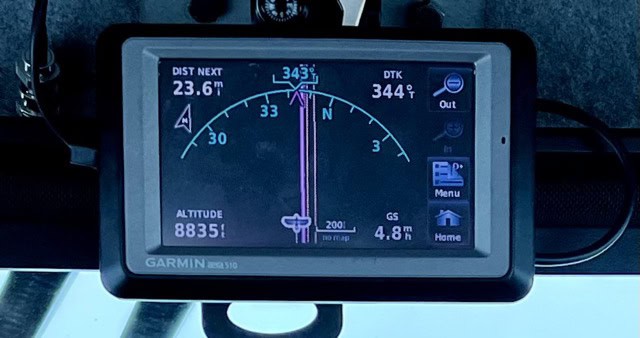
Day 33: 15 February, 73 miles today, 769 miles remaining to McMurdo, elevation 8,130 feet, ambient temperature -24°C, somewhere on the Polar Plateau
A hallmark of every deployment to Antarctica is a point near the end when all I want is for it to be over. It’s possible to endure pretty much anything indefinitely when you have to, but when there is a fixed end to whatever madness you’ve chosen to put yourself through—and when that end is a month away or less—it becomes more and more the sole focus of your attention. I had grown tired of having to be cold, tired of having to dress for the cold, tired of having to think all the time about the cold. I was tired of the long days, the long weeks, of barely having a moment for rest or recuperation. This Antarctic malaise is familiar to everyone on the ice, a nearly universal experience, though not everyone experiences it to the same degree and it can vary from deployment to deployment, depending on how jaded you’ve become by your time in the program. It’s called being toasty.*
I might not yet have reached my full capacity for toastedness, but lord knows I was getting crispy around the edges. I had been warned repeatedly that the SPOT 3 return would be the most grueling few weeks of the season, and so far this was proving more or less to be the case. We had been unexpectedly blessed with a streak of unseasonably warm weather: by mid-February temperatures on the plateau were regularly -45°C or below, with fierce winds to match, but we hadn’t seen anything much below -30°C. Even so, the mental grind is usually the hardest part of any long-distance endeavor, and this was no different. Even with the mostly genial weather, the SPOT 3 return had thus far turned out to be a slog for everyone remaining on the crew, just because we were all fucking worn out.
The wind that had terrorized us the day before had blown itself out overnight, but the flat light remained. The remaining miles of Sastrugi National Park were little different than the first, a constant exercise in being jostled and slammed by features in the snow rendered invisible by the soft sunlight, scattered and diffused by a uniform blanket of clouds. We had expected that, and I spent the day staring at the corner of my GPS display, watching the distance to the waypoint marking the end Sastrugi slowly, slowly, slowly tick down to zero. By early afternoon we were finally clear of it, and it was with enormous relief that I put my feet up on my bird boxes and settled back to enjoy a moment of not being rattled like a marble in spray can—but only a moment. As soon as the last Challengers was clear of the park, the order came down to throw our tractors into 14th gear.**
We all wanted to get back to McMurdo as quickly as possible, so no one complained, but driving at that speed through the rutted powder was worse than any stretch of the park had been. Any and every loose item in the cab was in constant, violent motion. Like being trapped in a broken etch-a-sketch being shaken by an angry, frustrated child, I was thrown savagely in every direction, watching as mittens, gloves, goggles and hats flew around the cab. My seat (referred to by Caterpillar, Inc. as the operating station) slid continuously back and forth, a strange feature that seemed to take the edge off the little jolts, but made the impact of the bigger ones all the worse as the operating station (seat) hit the end of its track. Bump bump SLAM! bump bump bump SLAM! bump SLAM!, until I became seasick with the constant movement. It wasn’t until the very end of the day, as I was driving back to camp from fuel circle, that it occurred to me that I had, at some point, left the seat (operating station) position lever unlocked, and that was why it had been sliding back and forth all day. I grimaced as I found the lever and pushed it back into place, and the operating station (seat) stopped its nauseating motion. It was an easy fix, an obvious fix, one that I’d have figured out hours earlier at any other point in the season. I was definitely getting toasty.

*Some say toasted or simply toast, but the general idea is that you’re burnt out for the season
**About 12mph
Day 34: 16 February, 46 miles today, 723 miles remaining to McMurdo, elevation 4,765 feet, ambient temperature -25°C, the Leverett Glacier
The day we came down the Leverett on SPOT 1 was socked in. In fact, from the day of our descent all the way to McMurdo—a town built in the shadow of a 12,000’ smoldering volcano—we didn’t see a single mountain. As SPOT 3 approached the edge of the Polar Plateau, it looked as if we were in for more of the same. In clear conditions, you can watch as the Watson Escarpment rises from the ice sheet, growing ever larger with your approach, but all we saw throughout the morning was the same disappointing wall of blank, uninviting clouds. We had enough tractors to take everything down in one go, but only if we married the empty fuel loads into two massive superloads, one with four CRREL tools and one with five. We were running thin on shackles and rope, but managed at the last moment to scrounge together enough supplies to tie everything together—and while we were focused on our job, the clouds finally tired of waiting for us and cleared off, leaving us with a pristine, unimpeded view of Mt. Beazley and McLean Peak, with the Harold Byrd Mountains rising from the broad expanse of the glacier’s downstream flow in the distance.
Antarctica offers few guarantees. You can plan your life around a future contract only to NPQ before you deploy. Life is precarious no matter where you go, but each moment on the ice is a gift with an uncertain—but unquestionably limited—shelf life. Many of the SPOT 3 crew planned to return the following season, in which case we would almost certainly catch some view of this absolute marvel of ice and rock once again. But that return could never be assured, and so as I tied 308 to the back end of the 5-pack of empty fuel loads, I stopped to drink in the surroundings. I may or may not ever see this place again, but I’d be damned if I didn’t take in what I could while I was there. A low, thin bank of clouds had hung back farther up the plateau, and these were flowing in slow, graceful swirls and dips over Beazley’s shoulder, a cloudfall of sorts capping the icefalls that lined the valley we would soon be following down. The sun burned low above the mountains before us, carving their profiles in hard shadows and glimmers of bright white snocaps. It was a beautiful day to climb down the Leverett.
There were five pairs making the descent: one taking the tool shed and skied tractor, one with a four-pack of empty fuel loads, one with our still half-full fuel load and pumps, one with a five-pack of empty fuel loads, and the last one with camp. My job was to anchor the back of the quintuple-married set of CRREL tools, a load that stretched some 400’ or more from end to end. One of the blade CATs would be at the lead doing all of the actual towing; I was there to make sure the long string of bladders and sheets stayed where it was supposed to, keeping it from swinging wide and taking out any trail markers or even whipping all the way around and crashing into the tractor up front. From the start, this was a challenge, as one of the CRREL tools toward the middle seemed almost desperate to pull hard to the right. A lumbering tower of a human being, delicacy and finesse have never been my forte, but these were exactly what the situation demanded as I had to coax the load back onto the trail without smashing it into itself or pulling it apart. My team was lucky—the pair up ahead with the 4-pack took out a 4×4 waypoint monument when their load swung suddenly wide as a mound of ice across the trail pushed it to the side. The damage was already done once we came through, or we would have certainly mowed it down ourselves. But all of us in the front were luckier than camp.

We were still only about halfway down the headwall when I noticed that the camp train had vanished from my rear-view mirrors. As the first of us reached the broad, flat area that marked the base of the big climb, the call came down to stage for an early fuel circle. Camp was going to be late and “we’re, um, going to have some work to do tonight.” The rest of us settled onto the landing zone and broke apart our supersized loads back into regular old extra-big loads, fueled and chipped the tractors, and set about refilling the 72 empty bladders—which had been partially flattened by the increase in pressure—with air. The three camp modules came and set up for the evening, without the CRREL tool that usually pulled up the rear. Fawlty Towers and H2, our small living annex and heated storage room, had been left most of the way up the headwall. As two of the tractors headed back up the glacier to retrieve them, the rest of us drifted over to camp to see what the hell had happened.
The entire train had been tagged on the way down, just like everything else—but unlike everything else, the rigging tying the anchoring tractor at the rear to the plastic sheets at the back of the train had failed on one the steeper sections of the descent, which had allowed all three of the hard-sided buildings to accordion into one another. The long, thick cable bringing power from the gen mod to the living mod (and from there onwards to Fawlty and H2) had been caught between the buildings and sheared into pieces. The buildings themselves were fine, no more than a few bent railings and a crumpled step, but one of the twin generators, whose exhaust had been repaired at Pole, had suffered a crack that couldn’t be repaired in the field, and whatever else happened, we’d be making the rest of the return without a backup—and regardless of how many generators we had, without a cable to send power down the line, the living mod, along with Fawlty Towers, would be completely unlivable.
Not wanting to risk another accident, the pair dismantled the end of the train—so the rear tractor could tie onto the more secure hitch at the rear of the living mod—and left that on a flat spot near the top. While the plastic sheets with the two buildings was being retrieved by the SPOT 3 supervisor and one of the operators, the mechanics worked feverishly to braid the cable’s copper innards back together. The rest of us, without any meaningful way to contribute the operation to save camp, ate dinner. The kitchen still had power, so our microwaved chicken cordon bleu were still warm. If all else failed, we would sleep in one uncomfortable pile on the kitchen floor, so it wasn’t as if we at any point were facing a Miracle in the Andes kind of situation, or anything. Or even anything so grim as having to retire into the heated cabs of our tractors, for that matter. Even so, as the evening wore on in the stiff, cruel, implacable wind, and the cable was repaired well enough to restore power to the entire camp, and the last two buildings were brought down and reunited with the rest of the camp train, the whole thing was a stark reminder how far we yet remained from the barest sliver of civilization, and how much space there was for things to go wrong in this vast and empty country.
