It started as an impulse purchase at a convenience store or a liquor store or somewhere else people where people go to exchange money for questionable life choices. I’d been aware of vaping only as an increasingly visible annoyance, something for trendy people to be seen being publicly obnoxious about. I swore for years to anyone who would listen that I would never become one of those people: I would smoke or I would quite, but I would never become one of those assholes expelling cherry-scented non-smoke in every public place and insisting on the right to do so because what they were doing was not technically smoking. And I never quite did become one of those people, but as more and more former smokers got into vaping it lost some of its early stigma, it began to seem more and more like something I ought to at least try before dismissing outright. It helped that at the time it was being aggressively marketed as a safer alternative to smoking—or at least the variations of e-cigarettes being sold by the big tobacco companies were. So when I ducked into the store that day for cigarettes and saw a little packet of disposable vapor sticks on sale for less than the price of a single pack of the real thing, I figured I didn’t have much to lose by giving it a try.
I didn’t mind it. Though perhaps a bit of a letdown when compared to the profound religious encounter described by most converts, it did at least teach me that there was more to the vaping world than the cloying, sickeningly sweet flavors continually wafting from the ranks of the devout with their large clunky, box-like vaporizers. Vaping could be relatively non-offensive, especially when compared to sticking a tube of tobacco into your mouth and lighting it on fire. It was also close enough to smoking to avoid the death by a thousand cuts that had been quitting with patches, lozenges, or gum. It was, finally, a method of quitting I could stick with, without fear that I’d be back to smoking later the same day.
In fact, it wasn’t really quitting at all—and even though it has since fallen out of fashion and is generally recognized to be fundamentally unhealthy, I still don’t think I made a particularly risky decision when I chose to switch over to vaping full-time. My reasoning, which I still think is sound, went that that vaping, which might well be dangerous, was overall a better choice than smoking, which was provably, unquestionably, absolutely, indisputably, and incontrovertibly dangerous. It was the odd case in which the devil you didn’t know was actually preferable to the one that you did, as the worst case for the unknown was that it prove to be only as bad as the one you’d been inhaling for years. But this lifestyle change came at a cost, as it meant that I would have to learn to tolerate the ever-noxious atmosphere of vape culture.
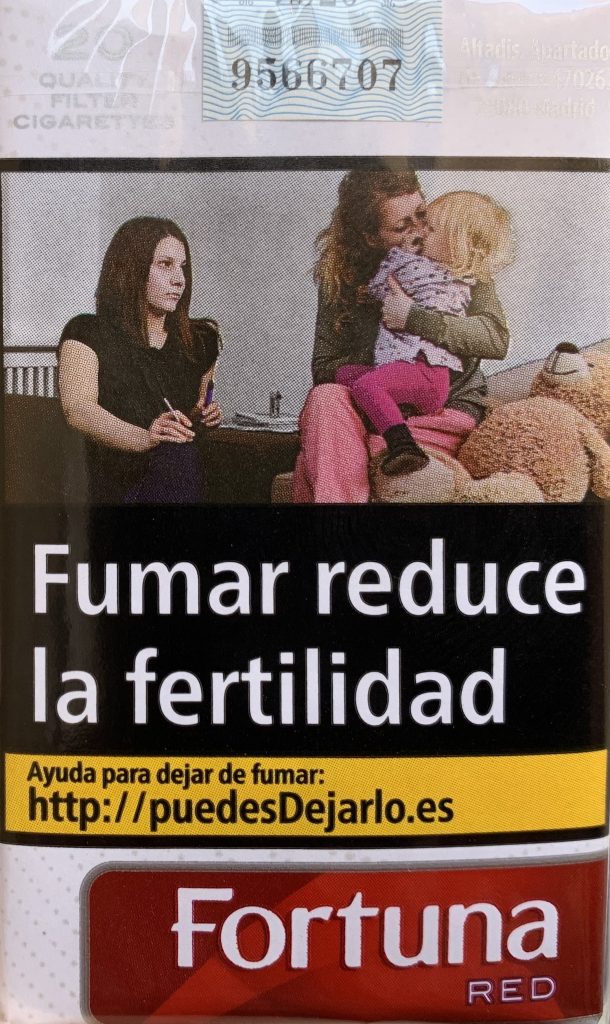
And it is a culture, to be sure; one that was particularly suited to the Pacific Northwest of the early 2010s.1 The store in Seattle where I bought my first mod (i.e., large, clunky, box-like vaporizer) and where I went every week to re-up on “e-juice” was about 15% vape shop and 85% lounge, and was as I’d come to find out pretty run-of-the-mill. It kind of spooked me that there was always at least one person just hanging out, someone who didn’t even work there but would hold me up as long as they could, talking the merits of using this coil with that voltage setting, or sharing their terrible, terrible tastes and recommendations of the flavors available. That has been my experience in every vape shop I’ve visited, in every city and in every part of the country. It really doesn’t compare to any other retail environment—not even the Amsterdam hash bars or classic opium dens half of them seem to be modeled after. Your corner dive bar, for example, might have one or two regular drunks who hang out from opening to last call, but they’re never the type to make a series of helpful suggestions to everyone who bellies up for a drink on everything from alcohol content to the temperature of the ice to which kind of glass is best suited to what kind of booze. It’s just weird, and I always had to take a deep breath before going inside to ready myself for dealing with these people.
Regardless, vaping was an improvement over smoking in several important ways. The flavors I preferred tended toward the subtle, and it was easy to vape for hours in a company vehicle (or by an open window in a warehouse) without anyone at work ever figuring it out, and I could vape in my one-bedroom apartment without turning it back into the 800-square-foot ashtray I’d created when I’d insisted previously on smoking in it. Whatever the long-term effects, it was easier on my lungs than cigarettes, a difference I could distinctly feel. I found myself running farther and faster and with greater ease than at any time while I was using tobacco—it was, in fact, around this time that I began exploring the equally niche and zealous world of distance running. Furthermore, when you get into mods and other refillable devices, you can start to customize the amount of nicotine in your vapor, with the result that you can wean yourself off of nicotine so slowly that you legitimately do not notice. After a year, I had stepped down the amount of the drug I was actually ingesting to about half of what it had been while I was smoking, and all without the withdrawal that accompanied every other method I’d tried. After years of failed attempts at quitting, I had finally found process so gradual and painless that it seemed guaranteed to work. And then I got a job in Antarctica.
The problem with living and working in Antarctica2 is that it’s cold and it’s remote. If you run out of juice for your mod, you can’t buy more. If any piece of your surprisingly delicate machine breaks or springs a leak, you can’t replace it. Cold weather plays hell with anything that runs on a battery, and trying to keep a vaporizer in my coat or pants usually resulted in a pocket full of e-juice and mod that still froze up anyway. Don’t get me wrong, plenty of contractors in Antarctica vape. You can deal with the difficulties if you can stay truly committed to the cause—but you have to be truly committed.3
Vaping in Antarctica is not only a pain in ass, but it’s a pain in the ass in one of the only places where you can still buy a pack of smokes for $5.00 USD. On three separate deployments (my first included), I went down with the full intention of sticking to vaping, swearing to myself each time I wouldn’t ever give in to the temptation to buy the decade-old Camels available in the station store. Ultimately, though, vaping is only almost as satisfying as smoking an actual cigarette—and even if they’re desiccated and stale, actual cigarettes will always be difficult to resist when they are readily available. Especially if they’re cheap and you’ve become fairly desperate for nicotine after your mod died in the morning after a single puff. When I finally found myself lured back to the real thing, it was only a matter of time before I eventually gave up on vaping altogether as a lost cause. The Book of Matthew says that no man can serve two masters, and in the end I opted for the more reliable one; the one that cost $5.
I was back to a life of smoking, peppered here and there with the odd try at quitting, even as I adapted to working a seasonal schedule and spent much of my off-time in places where cigarettes weren’t as readily available. I smoked my way along the Appalachian Trail, though I made a half-assed attempt at quitting by intentionally not packing out any tobacco when my group entered Shenandoah National Park. It was an attempt predicted on the idea that the solitude of the backcountry would prevent me from doing anything to overcome my withdrawal; but Shenandoah, it turns out, is not the place to go for solitude. It was, rather, by far the most crowded section of the AT, and it was impossible not to view every one of the thousands of motoring tourists as potential sources for cigarettes. I was constantly on edge, trying to bum off of every stranger who looked vaguely “smoky” and flirting shamelessly with every underpaid lodge employee who had the telltale rectangle of a pack of Marlboros poking through his or her apron.
I had better luck in the Sierra Nevada while hiking the Pacific Crest Trail the following year. While the physical need for nicotine is still very real and very sharp, there is something about the knowledge that there is no potential source anywhere remotely near you that eliminates (or at least seriously dulls) the anxiety of withdrawal. I had been right in thinking on the way into Shenandoah that isolation and solitude would help the process along, as there is nothing you can do about it but just sort of let it go. The theory actually bore fruit once I put it to the test using actual isolation and solitude, and I was able to quit in the backcountry of central California relatively simply. The problem was that I always ended up smoking when we got to town, where cigarettes were once again plentiful and easy to find (if not exactly cheap). I quickly got tired of repeating the ordeal of physical withdrawal every week. By the time my hiking partner and I left South Lake Tahoe some 400 miles later, I was back to packing out a pouch of rollies4 from every town stop. Quitting was a dumb, pointless dream, and if I was doomed to a life of diminished cardio-vascular function, then so be it. After the PCT, I once again gave up hope and went back to my old habit full-time. I smoked more; I ran less.
When life and the emergence of the Covid-19 pandemic conspired to end my hike of the Continental Divide Trail before it started—and I began training for a solo marathon just so I could do something with the time I would have spent on trail—I started thinking about quitting once more. Running as a smoker sucks. Vaping had once helped me greatly improve my pace and endurance—surely quitting outright would help even more. And judging from how ridiculously easily I was getting winded these days, I figured I could use all the help I could get. I would try once again to quit. But how?
Patches hadn’t worked. Vaping hadn’t worked. Aides and replacements didn’t get the job done; the only thing that had ever really worked for me was going cold turkey. True, I had been 20 the one time it had stuck, and I was very much not that age anymore, but everything else I’d tried had failed. Either I was going to quit outright or I was never going to quit at all. My only viable path to becoming a non-smoker went straight through the nightmare of withdrawal: I would have to get all the way through to the other side and then find a way to stay there. It doesn’t help quit when you know exactly what you’re about to do to yourself, so I had to sort of build up to it. I spent a couple of weeks mentally preparing myself for what I was about to put myself through, cherishing each cigarette as I smoked each down to the filter. As the night before the day I’d chosen finally fell, I smoked my last cigarette just like any other and went to bed. When I woke up in the morning, I was no longer a smoker. Simple as that.
Simple, but not easy.
1. Think pasty, overweight white guys in t-shirts and fedoras
2. Well, the relevant problem with living in Antarctica
3. It was pretty easy to picture any of the die-hards I met on the ice spending long afternoons sitting idly in vape shops back home, talking endlessly to strangers about their preferred combinations of coils and juice
4. With, I had learned from hard experience, extra papers