I thought about smoking all the time. All. The. Time. It was somewhere in my mind, often lurking in the background, but more often demanding attention away from whatever I trying to focus on. I thought about smoking at breakfast. I thought about smoking while running. I thought about smoking in the shower. I thought about in the car, at the store, and on the phone. I thought about it while reading and working and watching TV. While I slept, thoughts of cigarettes continued to branch and flow through every synapse like, well, like the steady stream of smoke curling from the tip of a lit cigarette. Aside from the physical discomfort inherent in withdrawal, the obsessive thoughts themselves are a kind of agony, the mental equivalent of drip-water torture. Eventually, you just want a cigarette so you can stop fucking thinking about it for a few minutes.
A thing they1 will tell you do when you are getting ready to quit smoking is to write down lists of why smoking ruined your life, or lists of things you look forward to in your future life as a nonsmoker, or lists of the reasons why you want to quit smoking in the first place, such as you aspire to be alive when your daughter graduates from daycare or whatever. The point is to have something metaphorically concrete for you to grasp onto when a craving hits and willpower dissolves like so much ash into the dirt. I thought it was a dumb concept—corny and probably useless at best—and I resisted it for weeks, or at least days, as I was preparing to try yet again to walk away from a life of cigarettes. In the end, though, I did write down one—and only one—thing to remember when the clenched-teeth headache and the gouged-out feeling in the back of my eyes made me question whether smoking was really, like really really, all that terrible in the first place. One maxim, one affirmation, one rule, one certain, rock-solid ideal to lean on when not having a cigarette felt like the worst possible idea in the world: “remember that life sucked while you were smoking, too.”
The idea was pretty straightforward: stress had always been my biggest single trigger for smoking, and smoking had always been my immediate response to stress. Something at work not going right? Smoke. Partner break up with you? Smoke. Car accident? Stub your toe? Friend commit suicide? Miss the bus? Spill your coffee? Smoke, smoke, smoke, smoke, smoke. But it was also always a limited security blanket, at best. Getting through the day would continue to be as awful and stressful with the cigarette I was using to try to calm my nerves as it would be without it. I could chain-smoke a pack in one sitting and ultimately still not feel any better about whatever the actual problem was, on account of how smoking doesn’t actually do anything to solve whatever the actual problem is. Work would still be tedious, busses would still be missed, coffee would still be spilled, and the world would continue to produce misery on a global scale regardless of whether or not I was poisoning my lungs. I couldn’t change the whole universe, only my own response to it. And so, “remember that life sucked while you were smoking, too.”
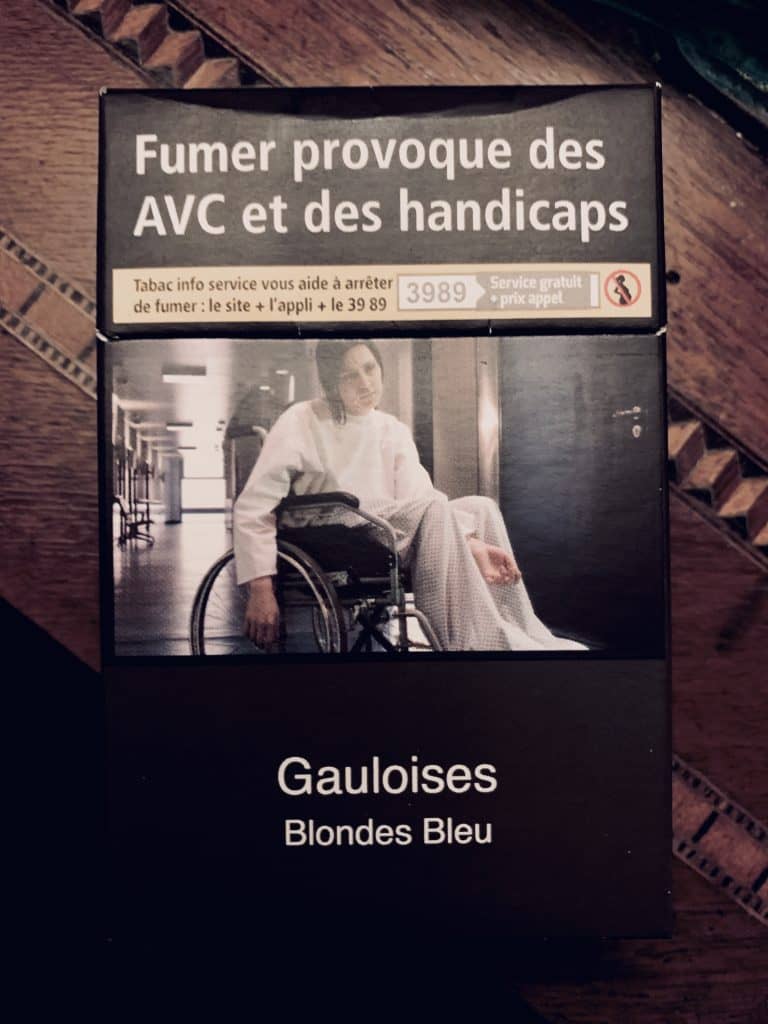
The snag I hit pretty quickly once I had actually quit, however, was that now when I got stressed, I got stressed about whatever thing was actually stressful and I got stressed about the fact that I was not going to have a cigarette about it. The logic that “smoking doesn’t actually do anything the solve whatever the actual problem is” falls apart when one of most pressing the problems you’re currently having is not smoking. As it turned out, it wasn’t so much that smoking made my life any better, but rather that not smoking made my life measurably, objectively worse. How bleak, then, was the prospect of extending such a life? Of taking measures such as this to add days and weeks and months and even years of wishing desperately that I still had the costly but certain comfort of a cigarette?
I was in a sort of mourning, though it took me a while to see it that way. That reads like a sort of grotesque hyperbole, I know, but it’s the only other experience I have that even remotely compares: breaking an addiction is its own kind of loss, one that fundamentally changes the quality and character of your life. And much as in other forms of grieving, I often found myself cheerfully looking forward to my next cigarette—e.g., “I just need to tie up this one last detail, and then I can step outside for a smoke”—only to remember suddenly that I had quit and feel the weight of that heartbreak come crashing down onto my battered spirit all over again. In those moments, it didn’t even feel like a choice, something I had decided to do. It was an act of God, something outside of my control, something that was happening to me. If cigarettes were dead to me, then, I would have to find other ways of coping.
I’d sworn to myself when I started this ordeal that I would be careful about my diet and wouldn’t allow myself to use junk food as a replacement for tobacco, but that proved to be wishful thinking by the time I was barely a week in. Even as I spent that summer training for a marathon and could reliably use running as a means of burning through my ever-bottomless stores of anxious non-smoker energy, I found myself eating pretty much any time I wasn’t panting up the Pennsylvanian mountain I’ve moved onto during the first peak of the Covid-19 pandemic. I worked myself hard that season, keeping myself in a near-perpetual state of exhaustion until I eventually made my grand attempt at running 26.2 miles in the very armpit of the Mid-Atlantic summer—but I snacked with equal ferocity, and ultimately managed to put on weight by the time it was over.
When I deployed to Antarctica that year, the dietary situation became even harder to manage. Addiction as a process has two distinct but equally important sides: there is the physical, metabolic dependency that by itself is often mistakenly labeled as addiction, but there is also a mental dependency, the effect of which on the addict is no less severe and which lasts a long, long time after the addict has successfully detoxed and the murderous pangs of withdrawal have passed. It is extremely difficult to try to take on both sides at the same time, which is why most advice on quitting includes a recommendation to change your life in other ways while attempting to break the physical addiction. It’s easier to change a habit if you can change its circumstances. I was extremely lucky to have been able to move to a part of the country I’d never before lived in, surrounded by people who had never taken up the habit, my energy focused on a routine that was novel to me. Very few people are able to do that, and the “experts” are full of suggestions for those who can’t simply step into a new life when they need to. If you’re used to a cigarette with your morning coffee, they’ll say, switch to tea. Take a walk during what would have been your smoke break. Rearrange your furniture. Change your diet. Take up a new hobby. I’d tried all of these and more during past attempts, but the force of habit is stronger than most people are comfortable admitting.
I was fortunate, then, to have made it through to the other side of physical nicotine dependence well before I went back to my old job on the ice. Even so, returning to a life that had once been largely defined by smoking (and doing so particularly in the cold) was difficult. Distances between various buildings were measured in cigarettes, and I knew where to light up on my walk to work so I would finish just as I was approaching the butt bin outside the door. Tasks throughout the day were likewise counted by how many cigarettes they would take to complete. A vehicle check took one half, guiding someone in a loader up to the outdoor scale took one, and so on. With smoking so much on the forefront of my mind, I found myself drawn continuously to the snack drawer. I couldn’t divide the day into stale oreos they way I could cigarettes, but they did dull the edge of the insistent desire to light back up. And while “flamin’ hot” cheetos may have done truly terrible things to my insides over the course of that season, they did at least help keep me away from smoking.
Even so, I was as hot a mess as those cheetos by the time I left the ice. My single biggest aspiration in quitting cigarettes had been to make physical exercise less burdensome, but with the weight I’d put on during my thirteen months in Antarctica I couldn’t run without putting enormous strain on my knees. Meanwhile, my breathing while climbing stairs had become, if anything, more labored than it had been before I quit. Perfectly content as I had previously been to dad-bod my way through life, I was now carrying the additional equivalent weight of a healthy four year old everywhere I went. I had become a nonsmoker, sure, but a distinctly unhealthy one. My back hurt a lot of the time and things I had previously enjoyed doing had become difficult, exhausting, and frequently painful. Also, none of my clothes fit, and because I was too cheap to commit to buying a whole new set of clothes at this weight, my girlfriend was left to endure a partner whose wardrobe consisted almost entirely of baggy sweat pants and a single gray XXL Mountain Dew t-shirt that he had found in the trash.
So it wasn’t exactly my best self that landed in New Zealand on a drizzly night in October, but it was a least a self that had by then survived the stresses of both a year-and-a-half long (and counting) pandemic and a marathon deployment to Antarctica without actually picking up a single cigarette. I may have been in demonstrably worse health overall, but with one key improvement: I had noticed a gradual, small, but fundamental shift in way that not smoking felt. Rather than the pervasive sense of loss that had dogged me for the entire first year without tobacco and beyond, each new day without a cigarette had begun to seem increasingly normal—less and less like I was being deprived of something essential, something I simply couldn’t live without. Turns out I kinda, sorta could.
There were still moments when I would taken by surprise by sudden, intense pangs of sharp longing for the dull comfort of a cigarette in my hand and a lungful of smoke, but they were no longer a daily—or even a weekly—occurrence. I worried still that I might one day give into to one of these cravings and in one puff lose the months of suffering and effort it had taken me to get this far. And with good reason: people fail at this all the time, sometimes after years of success. Addiction is pernicious. It invades the darkest, most quiet corners of your being and is happy to wait there for you for the rest of your life. But as I closed in on two years since my last smoke, I was still doing well—better each day than the one before, not to sound too clichéd or Anonymously Alcoholic about the whole thing. I might always be somewhere on the knife’s edge between quitting and smoking, but after a year and a half of feeling like a fraud who was destined to fall back into his old habits, I had at last settled into a life without cigarettes. I was an ex-smoker, and for once I finally felt like one. I had moved on.
Now I just had to get in shape.

- Which they doesn’t seem to matter: when it comes to the cessation industry, every book, app, lecture, video, or life coach will tell you to do this