The following is the personal account of a single, long-winded individual’s experiences living and working in Antarctica. No part of it has been reviewed or in any way endorsed by the United States Antarctic Program or the National Science Foundation, or any other public or private organization, institution, contractor, or company associated therewith. The views expressed herein are the author’s alone, for good or for ill.
McMurdo Station – 1040 miles remaining to Pole
The weather in McMurdo had been terrible since around the time SPOT 1 left the station, but that was only a part of the problem. When the long series of unseasonable storms finally passed, leaving huge drifts and mounds to be cleaned off the hastily-compacted skiway at Willy Field, an Antarctic heat wave followed, which turned the snow road and every part of the airfields into a sort of thin white soup—but that still was only another part of the problem. The bulk of the issue was the ever-increasing decrepitude of the USAP’s aging fleet of LC-130 Herc skiers, and the fact that a few years before management of these aircraft had been transferred from the NSF to the New York Air National Guard, an organization that couldn’t be trusted to take care of the passenger van they were issued each year. By the time SPOT 1 arrived at the South Pole in the second week of December, when dozens of LC-130 missions were scheduled to have already been completed, the station had seen a grand total of 3.
Amundsen-Scott burns through approximately 400,000 gallons of diesel every year, keeping 100,000 more in reserve just in case something in the fuel supply chain goes wrong. SPOT 1 had come through with 164,000 gallons; if SPOT 3 brought down approximately as much again, that would still leave 70,000 that needed to be flown down via LC-130. Given the fact that the most any Herc flight could deliver is something around the neighborhood of 3,000 gallons, and the fact that the Air Guard was struggling even more than usual just to get any of their planes off the ground at all, that shortfall was simply not going to be made up this year. This alone would have made the pressure to get SPOT 3 out on trail enormous, but this wasn’t the first year that this had happened. In fact, this was the second or third in a row, and Pole had already burned through the last of its reserve fuel during the previous year. The buffer was gone, and with only a projected 330,000 gallons in the tank at the end of the season, the station would have to begin a sort of existential triage, deciding what buildings and projects they could afford to let go cold. At the start of mainbody, we had been told that the cargo I was slated to carry on the second go-round was critical, non-expendable, to be taken south this year at all costs—but before SPOT 1 had even returned to McMurdo, I was informed that I would be taking a load of fuel instead. This news did not exactly come as a surprise.
More unexpected for the SPOT operators was the push to turn us around as quickly as humanly possible. We had all dragged our trail-wearied asses back onto the rock* in relieved anticipation of McMurdo’s more relaxed 60-hour work week, only to be given a record/back breakingly short deadline to start making our way back to Pole. No previous team had made the transition from SPOT 1 to SPOT 3 in fewer than 14 working days; we were given 10. Complicating this tight schedule was the condition of the sea ice transition (more commonly known simply as the transition), a half-mile long corridor bridging the volcanic shores of Ross Island with the snow road on the more stable McMurdo Ice Shelf. While this stretch was notorious among station residents for turning into a unnavigable marsh each year in the heat of January, this summer it had become a true swamp with melt pools deep and wide enough to swallow a shuttle van up to the window seals. After two members of the Air Guard were medevac’d with back injuries following a single rough crossing, all light vehicles** traveling onto the ice shelf were required to take a ferry from one end of the transition to the other. This process, which involved driving the vans and trucks onto a pair of ruined HMW sheets that were pulled across a groomed stretch of slush by an antique Challenger operated by McMurdo Fleet Ops, added a good 40 minutes to the commute out to SPOTSA (and again coming back into station)—but with the transition a swiss-cheesy mess of slush, mush, and small lakes of murky liquid water, there was no way to avoid it.
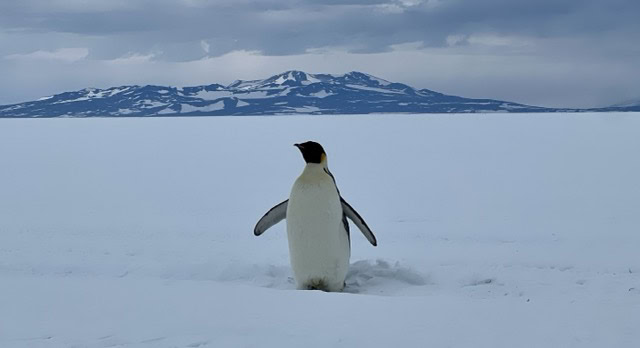
There were two key techniques used by the SPOT operators to replace the record number of cracked plastic sheets with which we’d returned to McMurdo and refill all 80 of our massive fuel bladders by our target date: working late every day and skipping lunch. The grueling turnaround was enough to make us long for the rigors of the trail, where the days were long, but missing the mid-day break was more the exception than the norm, and substantially less of the workday was spent soaking your pants by kneeling in a puddle of melting snow kissed by a thin sheen of diesel. Still, there were upsides to life on the rock: we’d made it back in time for Icestock, the annual McMurdo New Year’s celebration and the world’s southernmost combination music festival and chili cook-off. We could shower as often as wanted to, without having to wait in line or fill up the snow melter, and while the food in the galley would have been a misdemeanor offense had it been served in any public institution back in the states, it was nice not to have to cook anything. The weakening of the sea ice had brought an influx of wildlife—skuas hunting the hills for garbage, great clusters of seals nursing their pups in the safety of the open air, and even the odd penguin wandering out to watch us fill bladders or examining the growing line of full fuel loads parked out past the skiway.
We had been instructed to spend our time in the town resting and recuperating—though how exactly we were meant to do that while simultaneously busting our collective ass to get SPOT 3 rolling on schedule was never fully explained. Never one to miss the opportunity to spread myself too thin, I cheerfully overcommitted my free time as soon as we arrived, and then wondered why, through all the long work hours and extracurriculars, I never got to see Sean Meadow. Even so, we made what we could of little time and energy we had during the scant window I would be around. We went on one of the local hikes—my first through this entire deployment—threading our way over the lonely trail around the prominent cone of Ob Hill while the low golden sunlight brushed against the sprawling colonies of seals napping beside widening cracks in the sea ice. We danced in front of the Ice Stock stage, counting down the seconds to midnight and forgetting in all the noise and excitement the bottle of champagne we’d meant to open at the stroke of the new year. Even when we were too busy to see each other, passing through our dorm room like ghosts, with little notes on the white board the only clue that either of us had briefly visited this space in which we nominally lived, I could at least lay in the heavily-curtained dark of the night, listening with my eyes shut to the soft, regular whisper of her breath as she slept beside me.
As the date of our return to the trail sped every closer, I was given an appointment for a gall bladder ultrasound with a visiting radiologist who had just returned from the South Pole. This was a standard requirement for anybody planning to stay the winter—and with a recent change in USAP policy, now for anybody, like me, planning to stay even a few weeks past the end of the regular summer season. New to the ice, she was still giddy at the novelty of Antarctica, and all the strange things unique to the environment that most of the locals had long since taken for granted. Of these, the South Pole (overland) Traverse had stood out to her as one of the strangest and most compelling. As she ran the cold, lubricated wand over my side, she talked excitedly about the pictures on her phone she had taken of the pictures of earlier traverses hanging in the hallways of Amundsen-Scott. “It’s amazing, what you do,” she said, digging the rounded plastic under my ribs, “it’s like you guys are Shackleton and Scott, but in a Mad Max style. Now take a deep breath and hold it while I get this image.” She pressed a few buttons, and as I stared at the dimly-lit shower curtain, repurposed to give patients in the McMurdo clinic the illusion of privacy, I thought about the journey ahead—the long days driving into the great Antarctic wilderness, across the desolate ice shelf, into the belly of the transcontinental mountains, and up onto the empty, hostile desert of the Polar Plateau. I pictured the looming hulk and deafening growl of my idling tractor, the fuel load behind it tied to sheets of black plastic with a tidy rat’s nest of makeshift rigging, each small human in my band of road warriors tending to their own giant, fuming machine. In a couple of days we would be out of McMurdo, vanished again into the barren white yonder, adrift once more from the comforts of civilization and from the people there that we loved, shackled to the clock in a race against the end of summer but free in spirit as we piloted our agricultural tanks into a lonely world of snow and sky. “Ok, you can breathe out.” She paused, readjusting the wand against my belly. “I think you guys have the coolest job in the program,” she said. “Yeah,” I replied. “I was just thinking the same thing.”
*i.e., Ross Island
**i.e., passenger vans and pickup trucks